

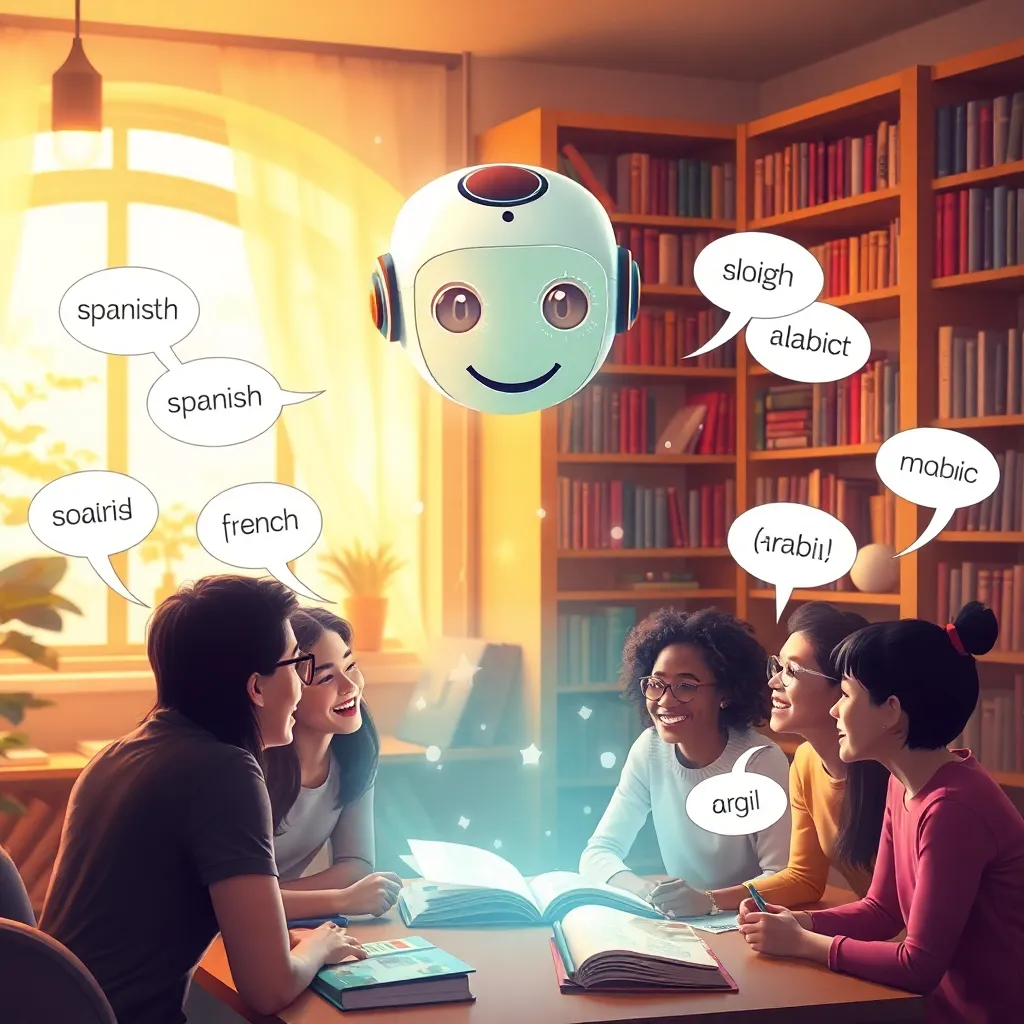
Your Next Language Tutor Might Be a Chatbot—And That's a Good Thing
I'll never forget the sinking feeling in my first college Spanish class. Our professor—a wonderfully stern woman from Madrid—called on me to answer a question. My mind went blank. The grammar rules I'd memorized evaporated. All I could manage was a weak "¿Puede repetir, por favor?"
That experience reflects how most of us learned languages: through textbooks, verb conjugation charts, and the constant fear of making mistakes in front of others. But what if learning French felt more like chatting with a Parisian café owner? What if practicing Mandarin resembled messaging a friend from Beijing?
The Classroom Isn't the Real World
Traditional language education has always suffered from a fundamental disconnect. We learn vocabulary lists and grammar structures in isolation, then hope they'll magically assemble themselves into fluent conversation when needed. But real communication doesn't work that way.
Think about how children learn their first language: through constant interaction, trial and error, and emotional connection. They don't study grammar charts—they immerse themselves in conversations where language serves a purpose beyond correctness.
Digital characters are bringing that natural learning process to language education. Instead of drilling flashcards, you might:
- Order virtual coffee in Italian from a barista who gently corrects your pronunciation
- Negotiate prices at a simulated Tokyo market with a friendly vendor
- Discuss poetry with a French literary enthusiast who adapts to your skill level
Why Conversation Changes Everything
Language lives in conversation. Yet most learning tools treat it like a puzzle to be solved rather than a dance to be learned.
I recently watched a friend use a language learning character for the first time. She'd struggled with German for years, but within minutes, she was laughing as her digital partner—a cheerful Berliner named Klaus—playfully teased her about article mistakes. "It doesn't feel like learning," she said. "It feels like talking."
That's the magic. When you're engaged in meaningful dialogue, you stop thinking about language rules and start communicating. The anxiety vanishes because there's no judgment—only conversation.
The Personalization Revolution
Every human language tutor knows the challenge: students learn at different paces, have different interests, and respond to different teaching styles. Digital tutors solve this by adapting in real-time.
If you love cooking, your practice conversations might revolve around recipes and kitchen vocabulary. If you're preparing for a business trip, your digital partner could simulate professional meetings. The technology remembers what challenges you, what excites you, and what you've mastered.
This isn't just more efficient—it's more human. The best human tutors personalize their approach, and now technology can too.
Breaking Down the Anxiety Barrier
Language learning anxiety is real. Studies show that fear of making mistakes prevents many people from ever achieving fluency. Digital characters create a safe space to stumble, experiment, and grow.
There's no embarrassment when you mispronounce a word to a chatbot. No silent judgment when you confuse verb tenses. You can practice the same phrase fifty times without worrying about wasting someone's time.
This psychological safety might be the most valuable feature of all. It allows learners to develop confidence before taking their skills into the real world.
More Than Words: Cultural Context
Language isn't just vocabulary and grammar—it's culture, humor, and social nuance. The best digital tutors incorporate these elements seamlessly.
You might learn Japanese while discussing seasonal festivals with a virtual local. You could practice Brazilian Portuguese by joking with a character who explains why certain phrases make people laugh. These cultural touchpoints make learning stick because they connect language to real human experience.
The Future Is Conversational
We're moving toward a world where language learning becomes increasingly integrated into daily life. Imagine having brief conversations with digital characters during your commute, or practicing ordering food while waiting in line.
This isn't about replacing human teachers—it's about complementing them. The best educators will use these tools to create more classroom time for meaningful human interaction.
Getting Started Yourself
If you're curious about trying conversational language learning:
- Start with a clear goal—Are you learning for travel? Work? Connection?
- Choose characters that interest you—Look for personalities and scenarios that genuinely engage you
- Embrace imperfection—Make mistakes freely and often
- Combine with human interaction—Use your digital practice to build confidence for real conversations
The Bigger Picture
At its heart, language learning has always been about connection—reaching across cultures to understand others and express ourselves. Digital characters aren't replacing that human element; they're removing the barriers that prevent us from reaching it.
Maybe the future of language education looks less like classrooms and textbooks, and more like conversations—with digital friends who help us find our voice before we share it with the world.
So the next time you think about learning a language, consider skipping the flashcards. Find a digital conversation partner instead. You might discover that the best way to learn to talk is simply to start talking.