

Can AI Characters Replace Pen-and-Paper Roleplay?
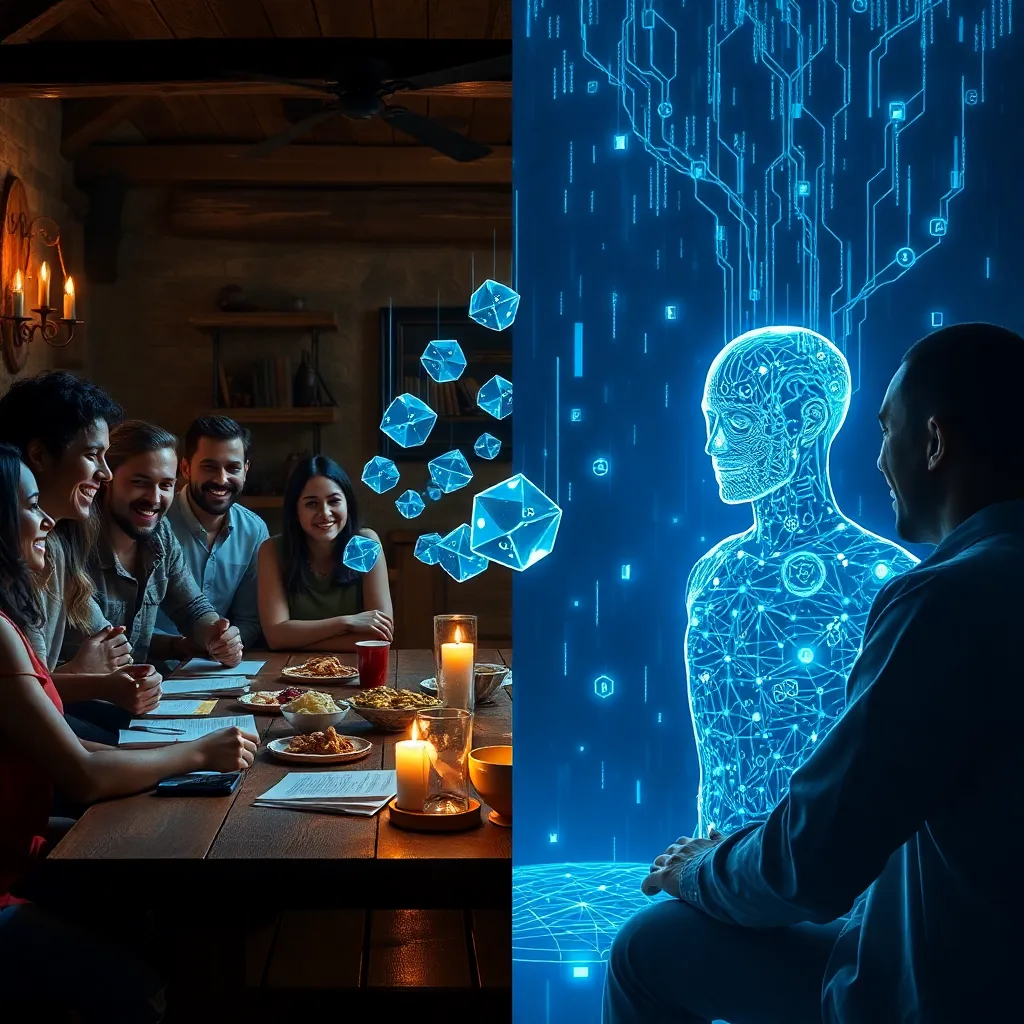
There's a certain magic that happens when friends gather around a table, dice in hand, characters sheets filled with hopeful scribbles. The dice clatter across wood, the game master describes a dark forest path, and suddenly you're not in a living room anymore—you're adventurers facing the unknown together.
Now, AI-powered characters promise to bring this experience to anyone, anytime. But can algorithms truly replicate the spontaneous creativity, emotional depth, and sheer unpredictability of human-led tabletop roleplaying?
The Allure of Always-Available Adventure
One of AI's biggest selling points is availability. Your AI game master never cancels because of work, never moves away, and never has scheduling conflicts. For gamers who struggle to coordinate busy lives, this 24/7 accessibility is incredibly appealing.
"I can play at 2 AM when inspiration strikes," says Mark, a longtime RPG enthusiast who's experimented with AI systems. "But there's something missing—the shared laughter when someone rolls a critical failure, the way the game master adapts to our crazy ideas."
AI systems excel at consistency and rules adherence. They remember every NPC name, track inventory meticulously, and never fudge dice rolls (unless programmed to). This reliability can be comforting for players who value structured gameplay.
Where AI Falls Short: The Human Spark
Tabletop RPGs thrive on human unpredictability. The game master who improvises a hilarious shopkeeper character on the spot. The player who decides their barbarian would rather befriend the dragon than fight it. The collective gasp when a clutch natural 20 saves the party.
These moments emerge from human chemistry, something AI struggles to replicate authentically.
Emotional Intelligence Gap
While AI can simulate emotions convincingly, it lacks genuine emotional understanding. A human game master can read the room—sense when players are bored, excited, or frustrated—and adjust the adventure accordingly. They build on player backstories in meaningful ways that algorithms often miss.
"My AI game master remembered my character's dead mother," shares Sarah, who plays both traditional and AI-assisted games. "But it felt like checking off a box rather than creating emotional resonance. When my human GM incorporated that backstory, it felt organic and impactful."
Collaborative Creativity vs. Algorithmic Response
Pen-and-paper RPGs are fundamentally collaborative storytelling. Players co-create the narrative with the game master, often taking the story in unexpected directions. This emergent storytelling is where some of the most memorable RPG moments are born.
AI systems, while increasingly sophisticated, still operate within programmed parameters. They can generate creative responses, but they lack the intuitive leap that makes human creativity so magical.
Hybrid Approaches: The Best of Both Worlds?
Many gamers are finding middle ground by using AI as a tool rather than a replacement:
- GM Assistant: AI helps manage rules, track NPCs, and generate random encounters
- Character Development: AI suggests character arcs or helps flesh out backstories
- World Building: Generating detailed locations, histories, and cultures
- Solo Play: AI enables rich solo RPG experiences between group sessions
"I use AI to prep for my weekly D&D game," explains Alex, a game master of five years. "It helps me generate interesting shop inventories or minor NPC personalities, saving me time for the important creative work."
The Social Element: More Than Just Storytelling
Tabletop RPGs have always been social experiences. The shared pizza, the inside jokes that last for years, the friendships forged through imagined adventures—these social bonds are fundamental to the hobby's appeal.
Can AI replicate the camaraderie of gathering with friends? The answer seems to be no, and perhaps that's okay. Maybe AI roleplay serves a different purpose: providing narrative experiences when human groups aren't available, or enhancing traditional games rather than replacing them.
Looking to the Future
As AI technology advances, the line between human and algorithmic storytelling will continue to blur. We might see:
- More sophisticated emotional intelligence in AI characters
- Better integration with voice technology for immersive experiences
- AI systems that learn and adapt to individual play styles
- Tools that make game mastering more accessible to newcomers
But the core question remains: Are we seeking convenience or connection? Efficient storytelling or shared experience?
The Verdict: Complement, Not Replacement
AI characters and game masters offer incredible tools for solo players, busy gamers, and those looking to enhance their traditional RPG experience. They're particularly valuable for:
- Practicing character voices and roleplaying
- Exploring game systems between sessions
- Solo storytelling when groups aren't available
- Assisting overworked game masters
However, the magic of pen-and-paper roleplay—the spontaneous creativity, emotional depth, and social connection—remains uniquely human. The laughter around a table, the shared triumph over a tough enemy, the way a game master tailors an adventure specifically for their players—these are experiences that algorithms can simulate but not replicate.
Perhaps the healthiest approach is to view AI as another tool in the RPG toolkit rather than a replacement for human creativity. Like digital dice rollers or character sheet apps, AI can enhance our games without replacing what makes them special: the people around the table.
What do you think? Have you tried AI-assisted roleplaying? What aspects of traditional tabletop gaming do you think are irreplaceable?