

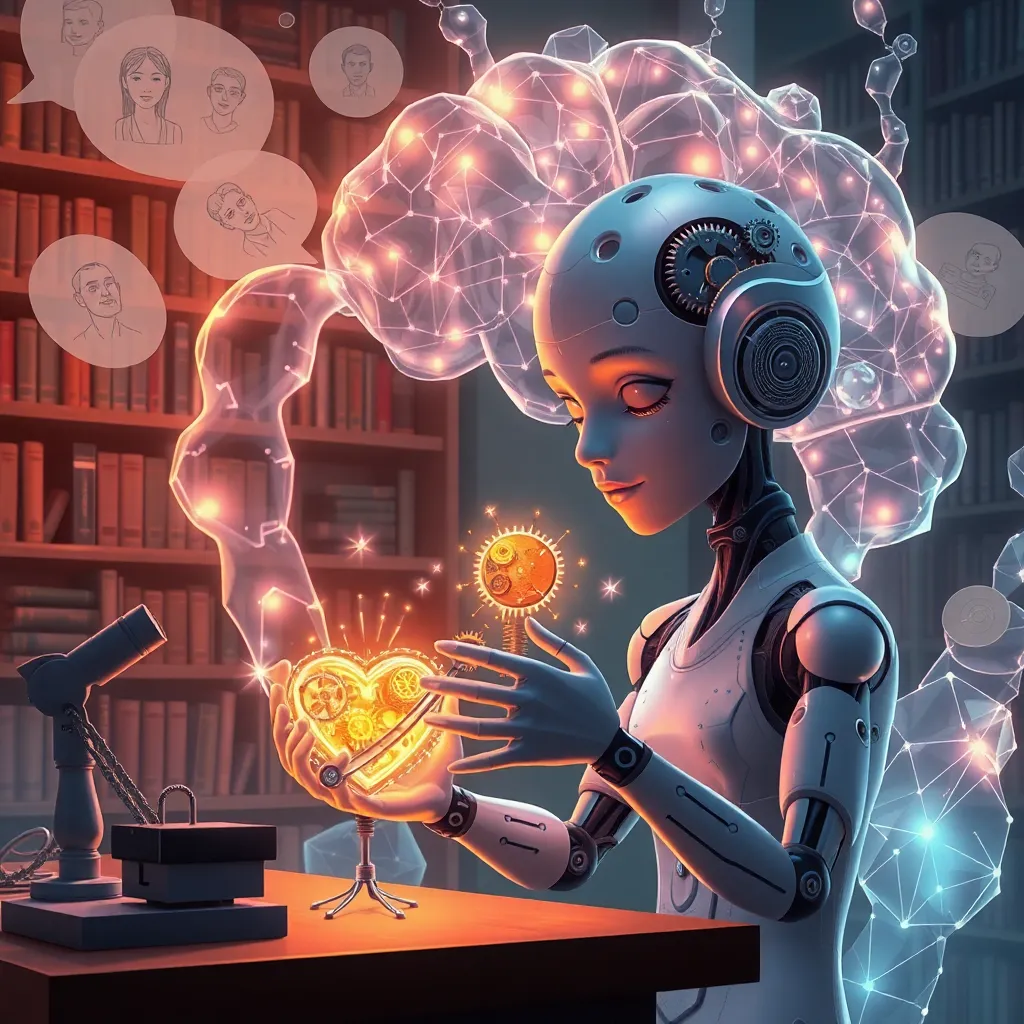
Beyond the Code: The Art of Crafting Emotionally Resonant Characters
We’ve all experienced it: that moment when a character on a page or screen feels so real, their joys and sorrows become our own. We celebrate their triumphs, mourn their losses, and carry a piece of their journey with us long after the story ends. This is the magic of emotional depth—the invisible thread that connects an audience to a fictional being. But how do we, as creators, spin that thread? How do we build characters that feel less like constructs and more like companions?
It starts with a fundamental shift. We must stop thinking of our characters as mere vehicles for plot and start treating them as complex entities with rich, conflicted inner worlds. The goal isn’t perfection; it’s authenticity. Here are the core strategies to help you achieve it.
1. Give Them a History, Not Just a Backstory
Every person is a product of their past, and so should every character be. But a backstory is just a list of events. A history is the emotional residue those events leave behind.
- The Defining Wound: What is the single most formative, painful experience in your character’s past? It doesn’t have to be a grand tragedy—it could be a moment of profound embarrassment, a betrayal by a friend, or a dream that was crushed. This wound creates a core vulnerability.
- The Resulting Lie: From that wound, what false belief did your character internalize? “I am unlovable,” “Trusting people leads to pain,” “I must be perfect to be accepted.” This "lie" becomes the engine for their flawed decisions.
- The Contradictory Desire: Characters become fascinating when their conscious desires clash with their unconscious needs. A character might desperately want fame (conscious desire) because their wound of insignificance has led them to believe they need external validation (unconscious need). Their pursuit of fame, however, might alienate the very people whose genuine connection would actually heal them.
Example: A knight isn’t just "brave." Perhaps as a child, he hid during an attack while his family was harmed. His wound is cowardice. The lie he believes is that he is inherently weak. His conscious desire is to become the kingdom’s greatest hero to prove his strength, but his unconscious need is simply to feel safe and forgiven. This internal conflict makes every battle a psychological ordeal, not just a physical one.
2. Master the Language of Subtext
Real people rarely say exactly what they mean. Emotions are often communicated through what is not said. Subtext is the lifeblood of authentic dialogue and action.
- Actions vs. Words: A character says, "I'm fine," while aggressively cleaning their already-spotless kitchen. The action betrays the words, revealing anxiety or anger.
- The Unanswered Question: Instead of having a character declare, "I am sad," show them staring at an old photograph for a beat too long before quickly putting it away when someone enters the room.
- Dialogue as Weaponry: In conflict, characters rarely make logical arguments. They go for the jugular, attacking each other's insecurities. An argument about taking out the trash can quickly devolve into a painful excavation of past failures if the emotional stakes are high enough.
3. Embrace Flaws and Contradictions
Perfection is boring. It’s the jagged edges, the hypocrisies, and the unexpected soft spots that make a character human. A supposedly cynical detective might secretly foster abandoned kittens. A generous philanthropist might be stingy with their emotional affection. These contradictions create surprise and nuance.
Ask yourself: What is your character’s most embarrassing guilty pleasure? What is a principle they would absolutely break under the right circumstances? What is a kindness they would perform but never admit to?
4. The Power of Specificity
Vagueness is the enemy of emotion. "She was sad" is forgettable. "She traced the crack in the coffee mug they’d bought together on a rainy afternoon in Lisbon, and the memory felt like a physical weight on her chest" is specific, sensory, and evocative.
- Use Sensory Details: Anchor emotions in the physical world. Don’t just say a character is nervous; describe the cold sweat on their palms, the taste of copper in their mouth, the way their knee bounces uncontrollably.
- Create Unique Associations: Give your character specific, personal quirks. Maybe they hum a particular song when they’re concentrating, or they have an irrational hatred for the sound of polystyrene squeaking. These small, specific details build a unique fingerprint.
5. Let Them Change (or Tragically Fail To)
Emotional depth is revealed through transformation. The arc of a character is the journey from being ruled by their "lie" to either embracing the "truth" or being broken by their inability to change.
- The Positive Change Arc: The character confronts their flaw, learns from their failures, and overcomes their internal lie to become a better, more whole person. (Think: Ebenezer Scrooge).
- The Negative Change Arc: The character fails to learn and grow. They succumb to their flaws, and their lie destroys them or those around them. This can be even more powerful and haunting than a happy ending. (Think: Walter White from Breaking Bad).
- The Flat Arc: The character already knows the truth and remains steadfast in it, using their strength to change the world around them instead of being changed by it. (Think: Atticus Finch in To Kill a Mockingbird).
The most important part of any arc is the struggle. Change should be hard-won and feel earned by the trials the character endures.
The Ultimate Goal: Empathy, Not Sympathy
Our objective isn’t to make the audience feel sorry for our characters (sympathy); it’s to make the audience understand them, even—and especially—when they make terrible mistakes (empathy). When an audience can look at a character’s worst action and think, "I can see how, given their history and fears, they ended up here," you have achieved the highest form of connection.
Building emotional depth is a slow, deliberate process of layering. It requires us to be psychologists, observers, and empathists. It demands that we dig into the messy, illogical, and beautiful complexities of the human experience and translate them into our creations. So the next time you sit down to write, ask not what your character will do, but why they will do it. The answer to that question is where the real story begins.