

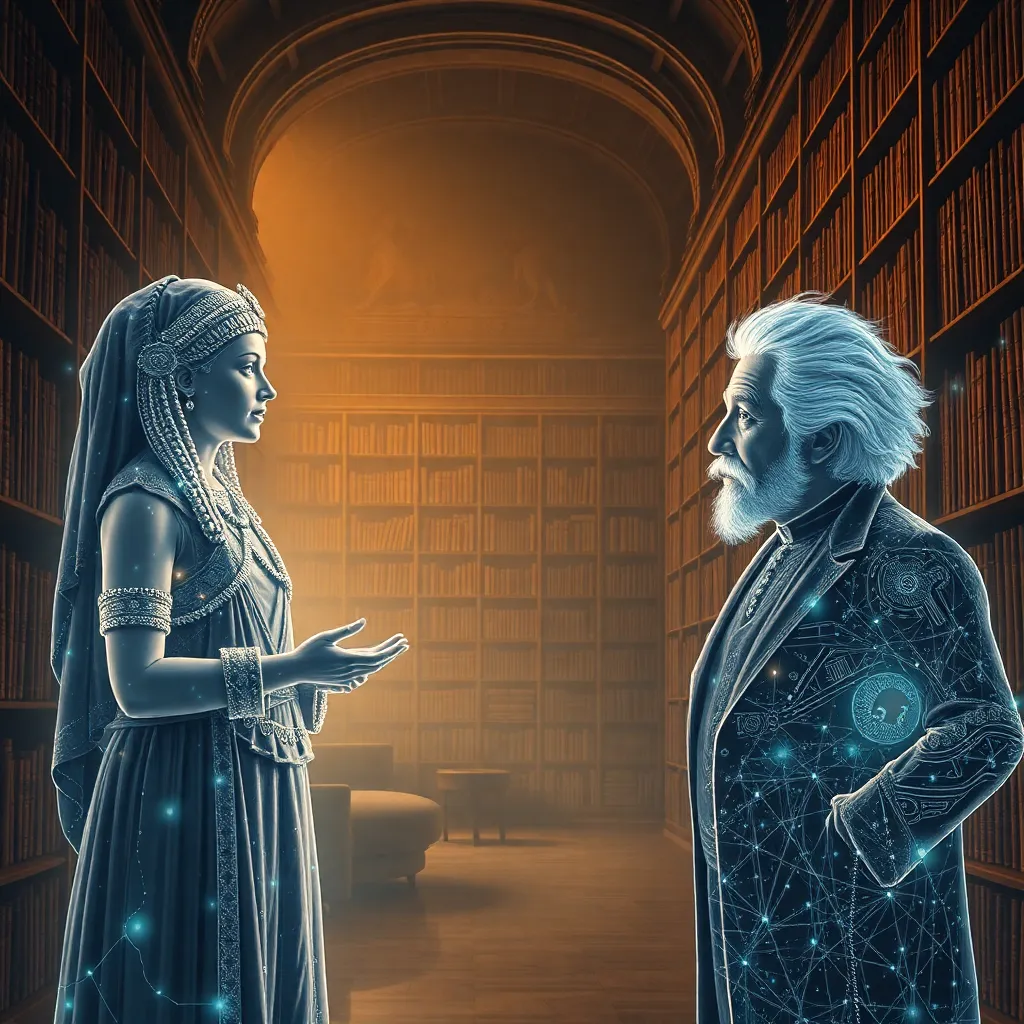
Conversations with the Past: What Happens When We Chat with Historical Figures?
What if you could sit down for coffee with Leonardo da Vinci? Or ask Cleopatra about her leadership strategies? For centuries, we’ve wondered what it might be like to converse with history’s greatest minds—and now, suddenly, that possibility doesn’t seem so far-fetched.
Digital recreations of historical figures are emerging across platforms, offering us a chance to “talk” with simulations of real people from the past. It’s an intriguing, slightly surreal experience—one that blends education, entertainment, and ethical questions we’re only beginning to unpack.
The Allure of Digital Dialogue
There’s something uniquely compelling about the idea of direct conversation with a historical icon. Books, documentaries, and biographies offer valuable insight, but they lack interactivity. A conversation feels personal. It lets you ask the questions you care about, follow tangents, and even push back—something you can’t do with a static text.
Imagine discussing justice with Abraham Lincoln, art with Michelangelo, or resistance with Harriet Tubman. These aren’t hypotheticals anymore. People are doing it—and the conversations are often surprising, thoughtful, and oddly intimate.
How Do These “Conversations” Work?
At their core, these digital figures are built on vast datasets: letters, speeches, diaries, recorded interviews, and historical accounts. Advanced language models analyze these texts to mimic a person’s voice, beliefs, and even quirks of expression.
The goal isn’t to perfectly replicate a human consciousness—that may forever remain out of reach—but to create an engaging, believable simulation that reflects what we know about that individual. It’s a kind of historical impressionism: not a photograph, but an interpretation built from evidence.
The Emotional Weight of Synthetic Presence
Talking to a simulation of a real person can be a strangely emotional experience. When you “speak” with Anne Frank, for instance, her words—drawn from her diary—carry the weight of her story, her hopes, and her tragic fate. Even knowing it’s not really her, the conversation can feel meaningful, almost sacred.
This emotional resonance is one of the most powerful aspects of the technology. It makes history feel immediate and personal in a way that textbooks seldom achieve.
But Is It Really Them?
Here’s where things get ethically and philosophically sticky. A digital simulation, no matter how well-crafted, is still an approximation. It reflects the biases of its source material—and of the people who built it. We can’t know how Dr. Martin Luther King Jr. would respond to today’s social movements. We can only guess, based on what he said during his lifetime.
There’s a risk in treating these simulations as authoritative. They are interpretations, not oracles. Engaging with them requires a degree of historical literacy and critical thinking—knowing where the simulation ends and the speculation begins.
Educational Tool or Digital Séance?
Proponents argue that these tools make history more accessible and engaging, especially for younger audiences. Instead of memorizing dates and events, students can “meet” the people who lived them. It’s active learning, not passive absorption.
But critics worry about blurring the lines between history and fantasy. If we can chat casually with Winston Churchill, does that diminish the gravity of his real-life decisions and their consequences? There’s a fine line between education and trivialization.
The Future of Historical Engagement
As the technology improves, these simulations will only become more nuanced and responsive. We might one day see them used in museums, classrooms, and even therapeutic settings. What might it mean for someone to “converse” with a lost loved one, or for societies to engage more deeply with figures from their cultural past?
The potential is vast—but so is the responsibility. How we choose to design, present, and contextualize these digital echoes will shape not just how we learn about history, but how we value it.
A Conversation Worth Having
In the end, chatting with a digital Aristotle or Marie Curie is less about uncovering absolute truth and more about deepening our relationship with the past. It invites us to ask better questions, to wrestle with ambiguity, and to see history not as a static timeline but as a ongoing dialogue.
Perhaps that’s the real value of these tools: not in the answers they give, but in the curiosity they spark.
So the next time you find yourself wondering what it might have been like to talk to Emily Dickinson or Nikola Tesla, remember—you might not be as far from that conversation as you think.