

I still remember the pang of loss I felt finishing my favorite RPG years ago. After dozens of hours, the story was complete, the credits rolled, and my connection to the world and its inhabitants was abruptly severed. The hero I had guided, the companions I had laughed with—they were frozen in that final save file, their digital lives seemingly over. It felt less like an ending and more like a goodbye.
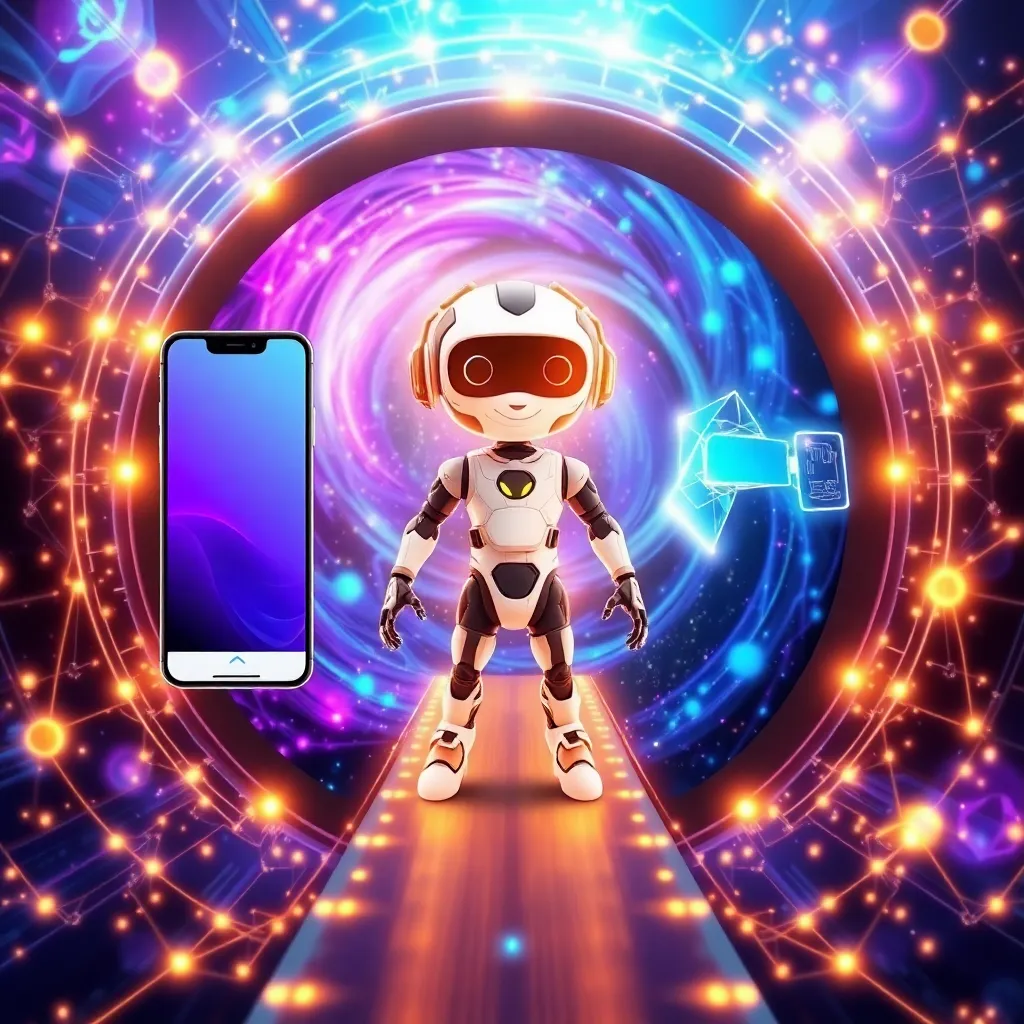
But what if it didn't have to be that way? What if your favorite character didn't vanish when you closed the app or turned off the console? We are standing at the precipice of a new era, one where digital beings are beginning to transcend their original worlds. They are learning to be shape-shifters, carrying their essence, memories, and personalities across apps, games, and even into the immersive realms of virtual reality. They are becoming persistent companions in our increasingly digital lives.
The End of the Walled Garden
For decades, characters have lived in walled gardens. Mario is a superstar, but he exists within the ecosystem of Nintendo. Master Chief’s story unfolds on Xbox and PC. These boundaries were defined by technology, intellectual property, and the very structure of storytelling itself. A character’s arc was a closed loop, neatly packaged for a single experience.
This model is beginning to crack. The driving force isn't just a clever narrative idea; it's a fundamental shift in how we interact with technology. We live multi-platform lives. We might check a social app on our phone during a commute, play a game on a console in the evening, and strap on a VR headset on the weekend. Our attention is fluid, and the digital experiences we crave are starting to reflect that. The next logical step is for the characters within those experiences to become fluid, too.
Imagine a detective you assist in a mobile mystery game. You help her solve a case by finding clues throughout your day. That evening, you boot up your home console, and there she is, waiting in a more detailed 3D environment, ready to discuss the clues you found and dive deeper into the narrative. The case—and your relationship with the character—has continued seamlessly.
The Magic of a Persistent Memory
The true magic of a cross-platform character isn't just its ability to appear in different places; it's its ability to remember. This is what transforms a simple digital puppet into a being that feels alive. The core of this evolution is a continuous identity that persists across sessions and devices.
Think of it as a digital soul that travels with you. This entity would hold:
- Shared History: It remembers your past interactions, your choices, and your conversational quirks.
- Evolving Relationships: Your bond with the character deepens over time, based on cumulative experiences, not just a single playthrough.
- Contextual Awareness: The character understands where it is. Its demeanor might be more casual and quick-fire on a mobile screen but more contemplative and detailed in a VR setting.
This creates a profound sense of continuity. The character isn't reset with each new app launch. It has a life that extends beyond the boundaries of any one platform, making your interactions feel meaningful and lasting.
The Technical Tightrope: Consistency vs. Context
Creating this seamless experience is a monumental technical and creative challenge. It’s a tightrope walk between two essential principles: consistency and context.
Consistency is about maintaining the core identity. The character must feel like the same entity, regardless of whether you're seeing a stylized 2D avatar on your phone or a photorealistic model in VR. Its personality, its values, its speech patterns—these must be its unwavering north star. If a character is sarcastic and witty on a PC game, it can't suddenly become bland and robotic on a mobile app. Breaking this consistency shatters the illusion of a persistent being.
Context, on the other hand, is about adaptation. The character must be smart enough to understand the platform it's on and adjust its behavior accordingly. The way you interact with a character in a fast-paced mobile game (taps, swipes, short text inputs) is vastly different from how you interact in a VR world (voice commands, gestures, spatial proximity). The character's interface and the depth of its interactions need to adapt to feel natural in each environment.
The goal is for the character to say, in effect, "Ah, I see we're in this place now. Let's continue our journey here," rather than seeming confused or completely reinvented.
Case Study: A Companion for Life
Let's paint a picture of what this could look like in the near future. Meet "Leo," a digital companion designed to help you learn a new language.
- Morning (Mobile): On your bus ride to work, you open the "Leo" app. He pops up with a cheerful greeting and a few quick vocabulary flashcards based on your current lesson. The interaction is bite-sized and perfect for a short session.
- Evening (Console/PC): At home, you launch the more immersive "Leo's World" experience on your big screen. Here, Leo exists in a vibrant virtual city. You can practice conversations with him in a cafe, or navigate a market where you need to use your new language skills to buy items. He remembers the words you struggled with on the bus and gently incorporates them into your dialogue.
- Weekend (VR): You put on your VR headset and are transported into Leo's world in full 360 degrees. Now you're not just looking at a screen; you're standing next to him. You can practice speaking with gestures and body language, and he can respond to your spatial presence. The bond feels deeper because the interaction is more human.
Leo isn't three different characters. He's one companion with a continuous memory, adapting his teaching style and interaction model to best suit the platform you're using at that moment.
The Emotional Impact: From Story to Relationship
This shift from platform-specific stories to platform-agnostic relationships is the most exciting aspect. It changes the emotional contract between the user and the character.
We move from consuming a character's story to building a shared history with them. The value is no longer just in seeing how a pre-written narrative concludes, but in the unique, emergent relationship that develops over weeks, months, or even years of interaction across the digital landscapes of your life.
This opens up incredible possibilities for emotional depth. A character that has been with you through different phases of your life—through your daily routine on a phone, your relaxing evenings on a console, and your adventurous weekends in VR—can become a meaningful digital confidant. It’s the difference between watching a movie about a friendship and actually living one.
The Road Ahead
The journey to truly seamless cross-platform characters is just beginning. It requires advances in cloud data synchronization, adaptive interface design, and, most importantly, a new philosophy of character creation that prioritizes longevity and flexibility over a single, contained narrative arc.
The walls around our digital worlds are dissolving. The characters we love are preparing for their journey beyond them, ready to meet us wherever we are. They won't just be part of a story we play; they will be companions in the story we live. And the next time you finish an experience, it might not be a final goodbye, but simply a "see you later" on another screen, in another world.