

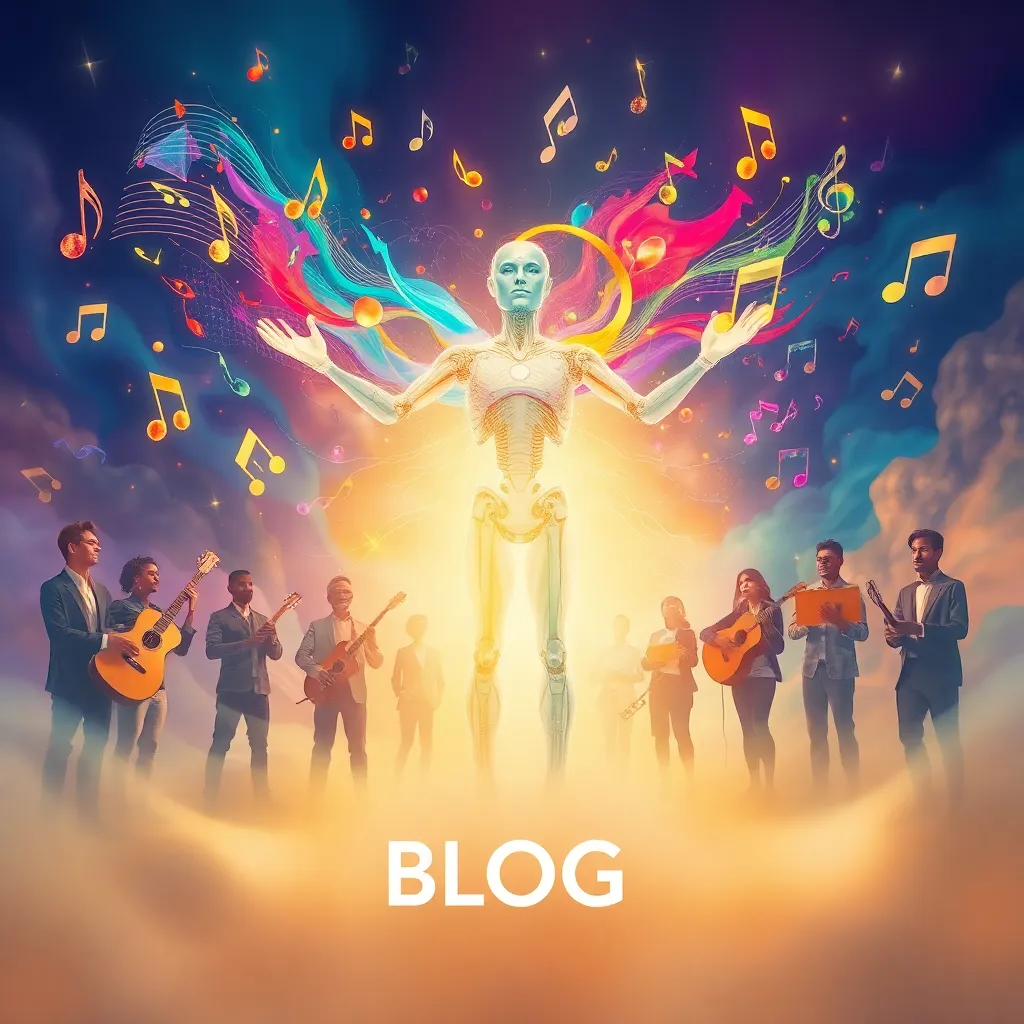
The New Muse: How Digital Characters Are Fueling Creative Breakthroughs
We’ve all been there: staring at a blank canvas, a silent DAW, or an empty page. The cursor blinks mockingly. The creative well feels dry. For centuries, artists have turned to muses—external sources of inspiration to ignite their imaginations. But what if your muse wasn't a person, a place, or a memory? What if your muse was a character, a personality you could conjure from the ether, tailor-made to guide your next project?
This isn't science fiction. A growing number of creators are discovering the power of collaborating with imagined personas to break through creative blocks and explore uncharted artistic territory. These digital muses are becoming invaluable partners in the creative process.
Beyond the Blank Page: Summoning a Creative Partner
The concept is simple yet profound. Instead of asking, "What should I create?" you begin by asking, "Who would create this?" You invent a character—a singer with a specific vocal style, a painter with a unique worldview, a composer haunted by a particular ghost. This character becomes your collaborator, your guide, and your source of inspiration.
Imagine you're a songwriter struggling with a melody. You could try endless chord progressions, or you could invent a character. Let's call her "Astra," a synth-wave artist from a retro-future. Suddenly, the question changes. It's no longer "What sounds good?" but "What would Astra play?" The palette narrows and deepens simultaneously. You might gravitate towards shimmering arpeggiators, driving basslines, and melancholic vocals. The character provides a filter, a set of aesthetic rules that paradoxically free you from the paralysis of infinite choice.
The Painter's Alter Ego: Finding a New Visual Voice
Visual artists are using this technique with stunning results. A landscape painter feeling stuck in a rut might invent an alter ego—a cartographer from a forgotten civilization, for instance. This character doesn't see trees and rivers; they see ley lines, spiritual energy, and mystical landmarks. Through this lens, a familiar forest becomes an enchanted wood, its colors more saturated, its forms more symbolic. The artist isn't just painting a scene; they are channeling a perspective.
This method is particularly powerful for developing a cohesive series. Each piece becomes a chapter in the character's story, creating a body of work that feels unified and intentional. The character's backstory, desires, and fears inform the color palette, composition, and subject matter in ways the artist might never have discovered on their own.
A Practical Guide to Creating Your Muse
Ready to try it? Here’s a simple framework to build your own creative partner.
- Define the Core Identity: Start with the basics. What's their name? What is their primary artistic medium? Are they a reclusive poet, a flamboyant fashion designer, a gritty blues musician?
- Develop the Aesthetic: This is the most crucial step. What does their art sound or look like? Is it gritty and raw, or polished and ethereal? Create a mood board or a playlist that defines their style.
- Uncover the Motivation: Why do they create? Is it for fame, for therapy, to send a message, to escape reality? Their motivation will influence the emotional tone of the work.
- Give Them a History: A brief backstory adds depth. Where are they from? What pivotal event shaped their worldview? This history can be a rich source of thematic material.
Case Study: The Album Born from a Persona
Consider the indie band "The Midnight Echoes." They were struggling to write their second album, pressured to replicate the success of their debut. Feeling constrained, they decided to write an album as a different band entirely—a fictional 1970s psychedelic folk group called "Vespera's Veil."
They created elaborate backstories for the band members, imagined the dusty recording studios they would have used, and limited their instrumentation to what was available at the time. This creative constraint was liberating. The result was an album that was unlike anything they had made before—richer, more atmospheric, and critically acclaimed. By stepping into the shoes of another, they found a new part of their own artistic voice.
Why This Works: The Psychology of Creative Distance
So, why is this technique so effective? It creates psychological distance. When you're creating for yourself, you're burdened by self-doubt, expectations, and your own internal critic. But when you're creating for or as a character, you're granted a layer of anonymity and freedom. It’s easier to take risks when the "you" in the equation is temporarily set aside.
This character becomes a safe container for experimentation. You can explore darker themes, sillier concepts, or more vulnerable emotions because they belong to the character, not directly to you. It’s a form of creative play, a return to the uninhibited imagination of childhood where inventing characters and worlds was second nature.
Your Creative Journey Awaits
The next time you face a creative block, don't just wait for inspiration to strike. Go out and meet it. Invent a collaborator. Have a conversation with this fictional entity. Ask them what they want to express. You might be surprised by the answers you receive.
The most powerful tools for creation have always been the ones that expand our imagination. By giving form to a digital muse, you're not replacing your own voice; you're giving it a new conversation partner, a provocateur, and a guide to help you discover the art that only you—and your new collaborator—can make.