

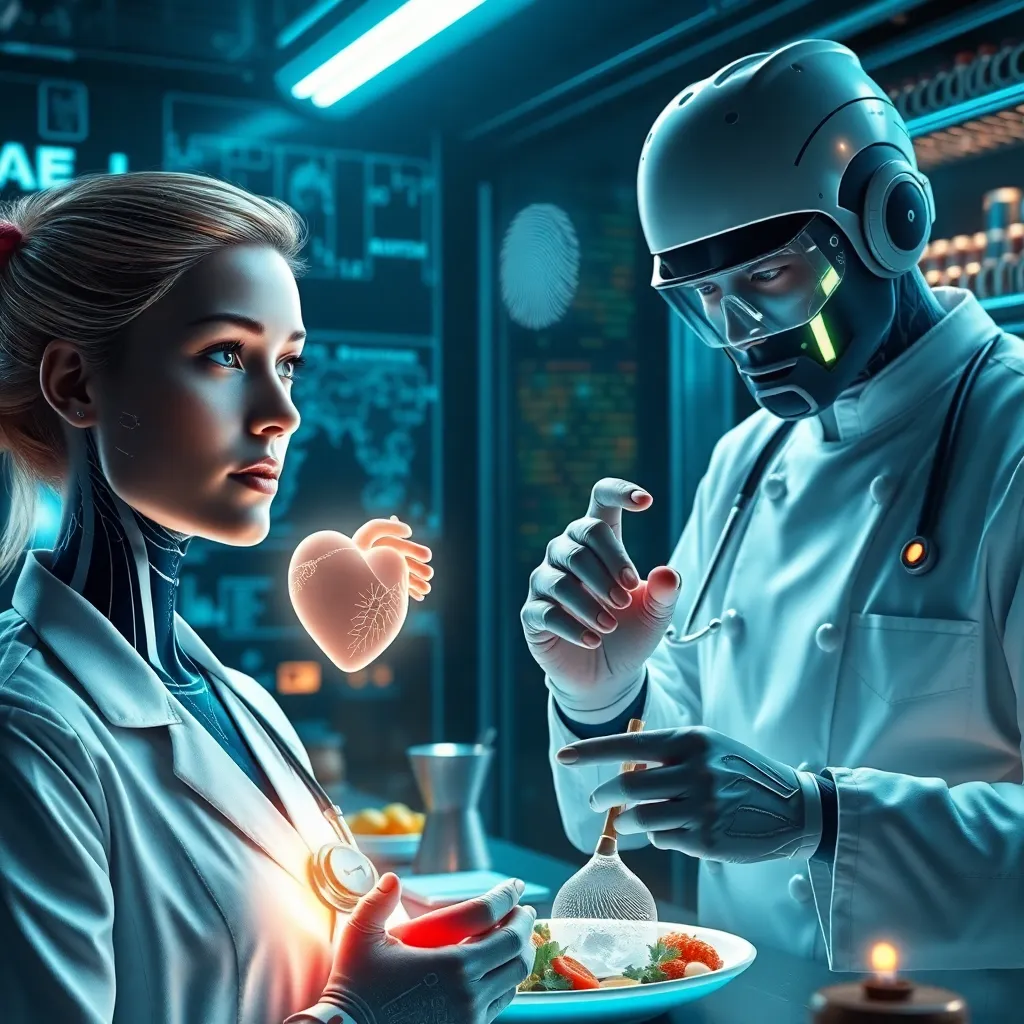
When a Digital Chef Teaches You to Cook: The Art of Learning Through Role-Play
Have you ever wished you could practice surgery without holding a scalpel? Or cross-examine a suspect without stepping into a courtroom? For centuries, apprenticeships and hands-on training were the only ways to master complex professions. But what if you could rehearse real-world skills in a space where mistakes don’t cost anything—except perhaps a bit of pride?
Welcome to the era of simulated professionals: digital counterparts modeled after doctors, chefs, detectives, and more, designed not just to inform, but to immerse, challenge, and refine your abilities.
Why Role-Playing Works: The Psychology Behind Practice
Humans learn by doing. It’s one thing to read about how to fillet a fish or diagnose an illness; it’s another to perform the action, respond to feedback, and adapt in real time. This is where role-playing with simulated experts shines.
These interactive characters aren’t just programmed responders—they’re built to replicate the nuances, pressures, and decision-making processes of their real-world counterparts. They allow learners to:
- Make mistakes safely
- Receive instant, contextual feedback
- Build muscle memory and intuition
- Develop confidence before applying skills in reality
It’s like having a patient teacher who never gets tired, never judges, and always meets you exactly where you are.
Meet the Digital Doctor: Practicing Empathy and Precision
Imagine a medical student interacting with a digital patient who presents symptoms, reacts to questions, and even expresses anxiety. This isn’t science fiction—it’s simulation-based training in action.
These virtual doctors (or patients) are designed using real case studies, clinical guidelines, and behavioral models. They help learners practice:
- Diagnostic reasoning
- Bedside manner and communication
- Triage under pressure
For example, a student might be faced with a patient complaining of chest pain. The digital character could respond to questions, exhibit physical cues, and react to proposed treatments—all while the learner navigates the stakes of a potential heart attack scenario.
It’s rehearsal for reality, with all the complexity and none of the risk.
The Virtual Chef: Mastering Technique Through Trial and Error
Cooking is equal parts art and science. A slight misstep in timing or technique can turn a masterpiece into a mess. That’s where a digital culinary instructor comes in.
Picture this: you’re learning to make soufflé. Your virtual chef guides you through each step—whisking egg whites to stiff peaks, folding gently, preheating the oven just right. But here’s the twist: if you overmix, the soufflé collapses. If you underbake, it’s runny. The simulation responds in real time, offering corrections and encouragement.
This kind of training helps aspiring chefs:
- Internalize timing and technique
- Understand ingredient interactions
- Build confidence before entering a high-pressure kitchen
And the best part? No ingredients are wasted, and no diners are disappointed.
The Interactive Detective: Sharpening Logic and Intuition
Solving a mystery requires more than just finding clues—it demands critical thinking, pattern recognition, and sometimes, a bit of intuition. Interactive detective simulations are built to train exactly these skills.
Users can question digital witnesses, analyze crime scenes, and piece together evidence. The characters respond based on programmed personalities and story arcs, sometimes lying, sometimes revealing crucial details only when asked the right way.
This kind of environment helps develop:
- Analytical and deductive reasoning
- Interview and interrogation techniques
- Ethical decision-making under ambiguity
It’s like living inside a mystery novel where you’re both the protagonist and the author.
Beyond the Screen: How Simulation Transfers to Real Life
Critics might ask: Can interacting with a digital character really prepare someone for the unpredictability of human interaction?
The answer lies in the design. The most effective simulations are built with variability, emotional depth, and randomized elements that mimic real-world unpredictability. They’re not meant to replace human experience—they’re meant to scaffold it.
Consider flight simulators. Pilots train for hours in virtual cockpits, facing engine failures, stormy weather, and emergency landings. When they finally step into a real plane, their reactions are sharper, their confidence higher. The same principle applies to these profession-based characters.
The Future of Professional Training
As technology evolves, so too will these training tools. We’re already seeing simulations that incorporate voice recognition, emotional AI, and even virtual reality to create fully immersive learning environments.
Soon, a law student might cross-examine a holographic witness. A therapist-in-training could practice sessions with a digital client expressing complex emotions. The possibilities are limited only by imagination—and ethics.
But the core idea remains: we learn best by doing, especially when doing comes with guidance, feedback, and room to fail.
A Final Thought
There’s something profoundly human about the desire to practice, to improve, to step into another’s shoes—even if those shoes are digital. These simulated professionals aren’t here to replace experts; they’re here to create more of them.
So the next time you find yourself taking advice from a virtual chef or diagnosing a digital patient, remember: you’re not just playing a role. You’re rehearsing for reality.
And who knows? That next perfect soufflé or life-saving diagnosis might just begin with a conversation with a character on a screen.