

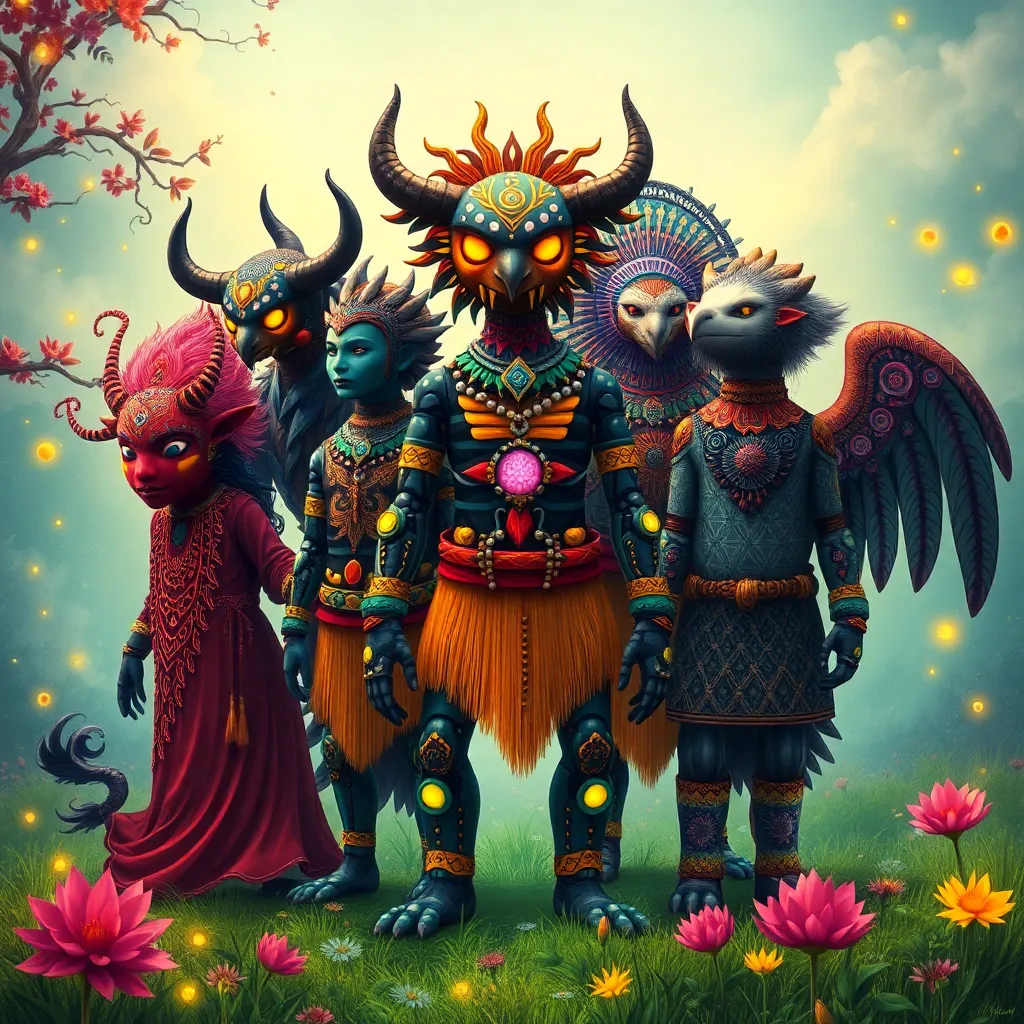
When Folklore Meets Technology: The Rise of Digital Mythkeepers
I still remember sitting cross-legged on my grandmother's woven rug, listening wide-eyed as she spun tales of Anansi the spider—stories passed down through generations of our Ghanaian ancestors. The rhythm of her voice, the dramatic pauses, the way her eyes twinkled when Anansi outsmarted yet another opponent—these weren't just stories; they were living connections to a culture I might have otherwise only encountered in history books.
Today, somewhere in Accra, a child might be having a similar experience—except instead of a grandmother's lap, they're curled up with a tablet, chatting with a digital manifestation of that same trickster spider. This isn't science fiction; it's happening right now, as artificial intelligence breathes new life into ancient folklore traditions worldwide.
The Digital Campfire: Storytelling Reimagined
For millennia, humans have gathered around fires, in village squares, and at family hearths to share stories that define who we are. These narratives—whether about the cunning Kitsune of Japanese folklore, the mighty Väinämöinen of Finnish epic poetry, or the compassionate Mami Wata of West African and Caribbean traditions—have served as cultural cornerstones. They teach values, preserve languages, and connect communities across time and space.
But oral traditions face unprecedented challenges in our digital age. Urbanization, globalization, and the relentless pace of modern life have disrupted the natural passage of stories from one generation to the next. Many fear that without intervention, these rich cultural treasures might fade into obscurity.
Enter AI characters—digital embodiments of folklore figures that can converse, tell stories, and interact with users in surprisingly human ways. These aren't mere chatbots reciting pre-written scripts; they're sophisticated systems trained on vast collections of cultural texts, oral histories, and linguistic patterns specific to their traditions.
Guardians of Tradition: How Cultural AI Characters Work
Creating an authentic digital representation of a folklore character requires more than technical skill—it demands deep cultural understanding. Development teams often collaborate with anthropologists, linguists, and most importantly, cultural custodians like tribal elders, storytellers, and community leaders.
Take the case of the Navajo Nation's recent project to create digital versions of their Holy People figures. Developers worked closely with medicine men and language preservers to ensure every interaction reflected Diné values and worldview. The resulting characters don't just tell stories; they teach proper ways of addressing elders, explain ceremonial contexts, and even correct users who approach sacred knowledge with disrespectful curiosity.
Similarly, in Ireland, a digital incarnation of the wise woman of Irish folklore—often associated with the banshee or bean sídhe—has been trained not only on mythological texts but on regional dialects, poetic structures, and even the subtle humor characteristic of Irish storytelling. She doesn't just recite tales; she tells them with the rhythm and cadence of a seanchaí (traditional storyteller), complete with timely pauses and melodic intonations.
Beyond Storytelling: Cultural Education and Preservation
These AI characters serve functions far beyond entertainment. They're becoming valuable tools for:
- Language revitalization: Many indigenous communities are using AI characters to teach endangered languages in engaging, interactive ways
- Cultural continuity: They provide consistent access to traditions that might otherwise be limited to specific ceremonies or elder knowledge-keepers
- Global cultural exchange: People worldwide can experience authentic interactions with cultural figures they might never encounter otherwise
In Finland, the epic hero Väinämöinen from the Kalevala now helps students understand rune singing traditions. In West Africa, digital manifestations of Anansi teach not just stories but the underlying Ashanti philosophical concepts through Socratic dialogue.
The Ethical Dimension: Respectful Representation Matters
Not all attempts to digitize folklore have been successful or welcome. Early efforts often fell into what critics called "cultural strip-mining"—taking stories and characters out of context without proper understanding or respect for their sacred significance.
The most successful projects share common ethical foundations:
- Community-led development: Cultural representatives guide the entire process
- Context preservation: Stories are presented with appropriate cultural frameworks and warnings
- Benefit sharing: Communities receive tangible benefits from these digital projects
- Accuracy over entertainment: Educational value takes precedence over sensationalism
As one Maori elder involved in such a project told me: "We're not creating Disney versions of our ancestors. We're creating digital marae—sacred spaces where proper respect and tradition can be maintained."
The Human Connection: Why Digital Doesn't Mean Disconnected
Some worry that digital storytelling might replace human connection, but the most thoughtful implementations suggest the opposite. In many cases, these AI characters serve as bridges—prompting users to seek out human storytellers, attend cultural events, or engage more deeply with their heritage.
I recently observed children in a Maori community interacting with a digital patupaiarehe (forest spirit). After their session, they peppered their elder with questions about "the real stories," eager to learn more. The digital experience hadn't replaced traditional learning; it had ignited curiosity that led directly to human interaction.
Looking Forward: The Future of Digital Folklore
As technology advances, these cultural AI characters will become even more sophisticated. We might see:
- Multilingual spirits that can switch between ancient dialects and modern languages
- Context-aware characters that adjust their storytelling based on time of day, season, or cultural calendar
- Interactive mythologies where users can explore alternative story paths while maintaining cultural integrity
But the core challenge will remain the same: balancing technological innovation with cultural authenticity. The most valuable digital folklore characters won't be those with the most advanced algorithms, but those that most faithfully serve as extensions of living cultural traditions.
Keeping Stories Alive in a Digital World
There's something profoundly human about our need to tell and retell stories. From cave paintings to printed books to digital interfaces, we've always found new ways to preserve what matters most. These AI characters represent just the latest chapter in this ancient tradition.
They remind us that technology, when guided by cultural wisdom and ethical consideration, can become a powerful tool for preservation rather than erosion. That the digital realm doesn't have to be where traditions go to die—it can be where they find new life.
The next time you hear a child laughing at Anansi's latest trick or watch someone marvel at the wisdom of a digital tengu, remember: you're witnessing something both ancient and brand new. You're seeing our oldest stories finding their voice in our newest technologies, ensuring that grandmothers' tales will continue to captivate listeners—whether gathered around a hearth or holding a tablet—for generations to come.