

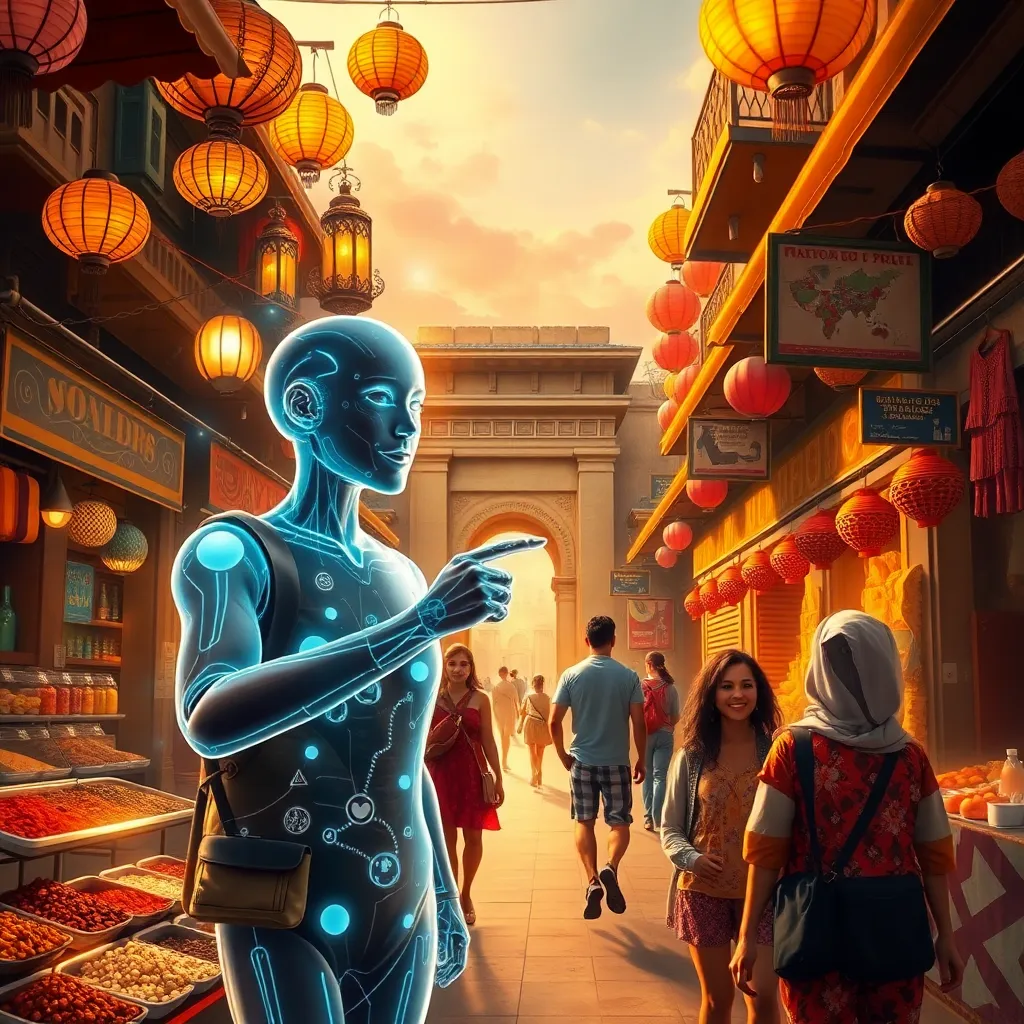
Your Digital Passport: Exploring the World Through AI Travel Guides
Remember the thrill of unfolding a paper map in a new city, the crisp sound as you traced your finger along unfamiliar streets? That sense of possibility—of not knowing what lies around the next corner—is something travelers cherish. But what if you could carry that magic with you anywhere, anytime? Even from your couch?
Enter a new era of exploration: AI-powered travel guides. These aren't just soulless algorithms reciting Wikipedia entries. They’re dynamic, knowledgeable, and surprisingly human-like companions ready to walk you through the world's wonders—whether you’re planning a future trip or simply dreaming with purpose.
More Than a Virtual Tour
We’ve all taken virtual tours. Click here, pan there, maybe listen to a pre-recorded narration. They’re informative, sure, but often… sterile. AI travel guides change the game by making exploration interactive, responsive, and deeply personal.
Imagine this:
You’re “walking” through the French Quarter in New Orleans. Your AI companion, let’s call him Jacques, doesn’t just say, "This is a historic building." Instead, he leans in (figuratively) and whispers, "This balcony right here? Legend says a famous jazz musician once proposed to his wife during a thunderstorm. You can almost still hear the trumpet solo if you listen closely."
It’s the difference between reading a menu and smelling the food. One gives you information; the other gives you an experience.
Meet Your Personal Cultural Ambassador
One of the most exciting aspects of these digital guides is their ability to embody specific personalities or areas of expertise. You’re not getting a generic voice—you’re choosing a travel partner tailored to your curiosity.
- The Storyteller: Perfect for history buffs. This guide doesn’t just list dates; they weave narratives filled with drama, romance, and intrigue, making the past feel vividly present.
- The Foodie: Your culinary sherpa. They’ll not only point you to the best street food vendors in Bangkok but explain the significance of each spice, teach you how to order like a local, and even share the recipe for that perfect tom yum soup.
- The Architect: For those fascinated by design and structure. They’ll reveal why a particular curve in Gaudí’s Sagrada Família isn’t just beautiful—it’s genius engineering.
- The Neighborhood Local: Want the inside scoop? This guide knows the hidden gems—the tiny bookstore with the grumpy cat, the park bench with the best sunset view, the family-run café that isn’t in any guidebook.
You can switch guides based on your mood. Fancy an art-focused stroll through Florence? Call upon your Renaissance expert. More in the mood for a deep dive into Incan engineering in Machu Picchu? Your archeologist guide is ready.
Planning with Purpose
For many, half the joy of travel lives in the anticipation—the planning, the dreaming, the meticulous crafting of an itinerary. AI companions supercharge this phase.
Instead of sifting through dozens of conflicting blog posts and reviews, you can have a conversation:
You: "I have three days in Kyoto. I love gardens, quiet temples, and want to try real kaiseki cuisine. I’m traveling with my mother, who can’t walk long distances."
Your Guide: "Understood. I recommend starting at Ryoan-ji Temple for its famous rock garden—it’s tranquil and mostly flat. For lunch, I know a small, family-run place nearby that serves exquisite tofu kaiseki. They have ground-floor seating. In the afternoon, we can take a short taxi to…"
It’s like having a travel agent, a local, and a historian rolled into one, available 24/7. They can factor in real-world constraints—budget, mobility, weather, time—and craft a realistic, enriching plan that feels personal, not generic.
A Bridge to Understanding
Perhaps the most profound impact of this technology is its potential to foster genuine cultural understanding. Travel, at its best, breaks down barriers. But physical travel isn’t accessible to everyone. These AI guides can act as a powerful bridge.
They can simulate conversations where you practice a new language, explain complex social customs and etiquette before you ever set foot in a country, and provide the rich historical context that turns a monument from a pretty picture into a poignant story.
It’s a form of empathy training. By walking virtually in someone else’s shoes, guided by a voice that understands the nuance of their culture, we build connections that transcend geography.
The Future is a Conversation
This isn’t about replacing the irreplaceable feeling of warm sun on your skin in a new land or the taste of a food you can’t pronounce. It’s about enhancing our relationship with our vast, wonderful world.
It’s for the student saving up for their big trip, using their AI guide to learn and plan every detail. It’s for the retiree with mobility issues who can once again “visit” the markets of Marrakech. It’s for the curious family, gathered around a screen, letting a digital storyteller bring ancient Egypt to life for their kids.
So, where do you want to go tomorrow? Who do you want to show you around? The world is waiting, and now, it’s ready to talk back.