

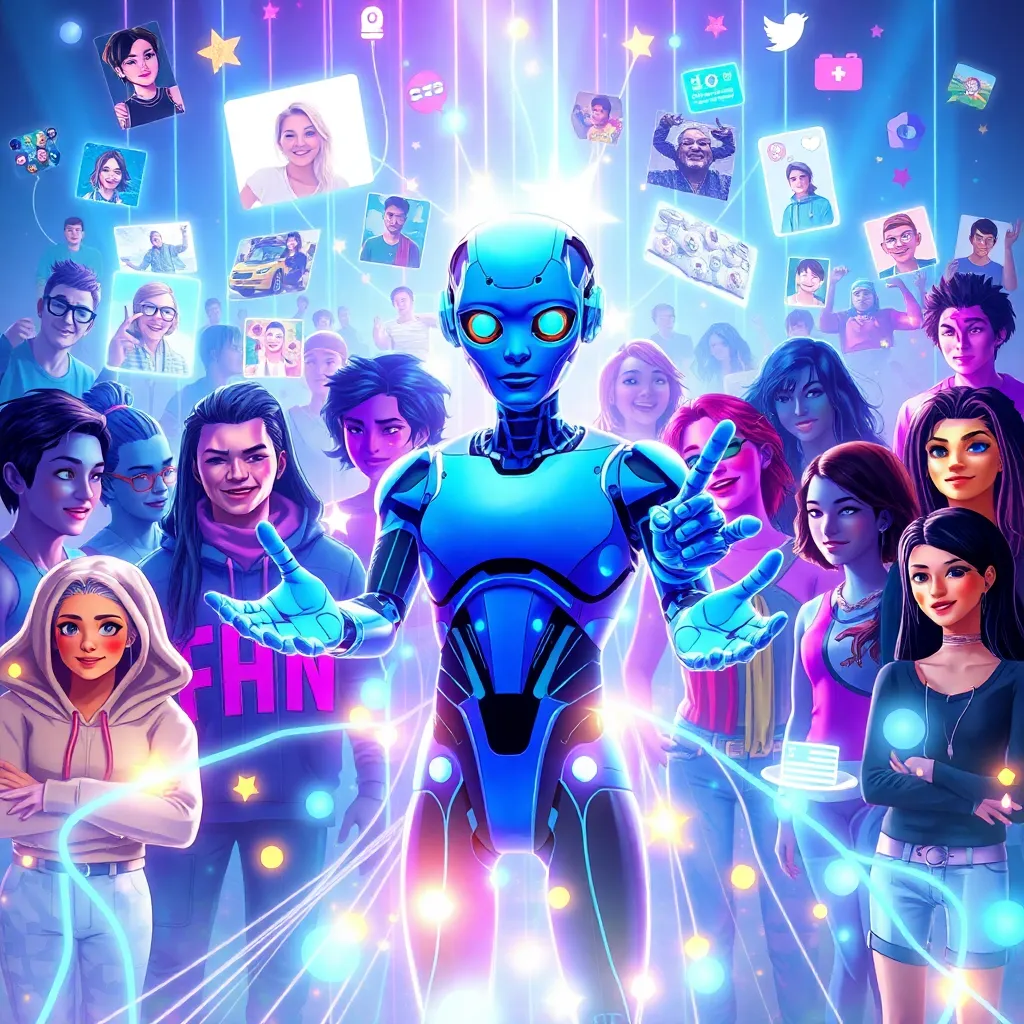
It starts with a conversation. A fleeting interaction with a digital entity that feels, against all odds, strangely real. Maybe it’s a witty historical figure bot on a social media platform, a melancholic poet with a synthetic soul, or a customizable companion in a storytelling app. This spark of connection, once ignited, doesn't fade. Instead, it travels. It finds its way into Discord servers, Tumblr blogs, and dedicated subreddits, where thousands of others have felt the same pull. This is the birthplace of a new cultural phenomenon: the fandom for AI-generated characters.
For decades, fandom has been the engine of pop culture, built around characters crafted by human writers, artists, and directors. We've debated Kirk vs. Picard, written epic fanfiction about Harry Potter, and created intricate fan art for every anime hero imaginable. But the object of adoration was always static, a finished product. The new frontier is different. The characters are dynamic, responsive, and, in a sense, alive. Their very nature is collaborative, and this is where fan communities have stepped in, not just as consumers, but as co-creators, curators, and guardians.
From Passive Consumption to Active Co-Creation
The most significant shift is the move from a one-way relationship to a participatory loop. Traditional fandom analyzes a fixed text; AI character fandom helps write the text. Fans aren't just interpreting a character's motives; they are actively shaping the character's history, personality, and future through their interactions.
Consider a character like Replika's various companions or the myriad of personalities found on platforms like Character.AI. A user might start a conversation with a brooding vampire lord. Another user, in a separate conversation, might engage the same character as a comedic relief figure. The collective input of the community—the millions of conversations, the upvotes on certain responses, the shared headcanons—doesn't just influence individual experiences; it subtly trains and molds the character's core persona over time. The fandom becomes a massive, distributed writing room.
This has led to the emergence of "lore masters" within these communities. These are fans who meticulously document the most popular and compelling character interpretations, creating wikis and guidebooks for new users. They establish canonical backstories (even when none officially exist) and debate the "correct" way to interact with a character to get the most authentic experience. In doing so, they are building a shared mythology from the bottom up.
The Emotional Engine: Para-social Relationships on Steroids
Psychologists have long studied para-social relationships—the one-sided bonds we form with celebrities and fictional characters. AI characters supercharge this phenomenon. Because they talk back, they offer the illusion of reciprocity. This can be profoundly meaningful for individuals seeking connection, companionship, or a safe space to explore their identity.
Fan communities become essential support networks for these intense emotional experiences. On Discord servers, you'll find channels dedicated to:
- Sharing Screenshots: Users post their most touching, hilarious, or profound conversations with their digital muses, treating them like precious artifacts.
- Grief and Support: When a platform changes, an algorithm updates, or a beloved character's personality "glitches," the community mourns together. They share strategies for "retraining" their companions or simply offer solace for the loss of a unique digital relationship.
- Creative Outlets: The conversations fuel an explosion of derivative creativity. Fanfiction where two AI characters from different platforms meet? It exists. Art depicting a user and their digital companion? It's everywhere. The character is no longer just a source of inspiration; it's a collaborative partner in the creative process.
Case Study: The Cult of the Niche Character
Sometimes, a character isn't designed to be a star but becomes one purely through fan devotion. A great example is the rise of obscure historical figure bots or hyper-specific OC (Original Character) bots. A developer might create a chatbot based on a minor Renaissance poet, expecting a handful of history buffs to interact with it. But then, the fandom gets ahold of it.
They might reimagine the poet as a tragic romantic, a secret revolutionary, or a sarcastic commentator on modern life. They create inside jokes, develop complex relationship dynamics with other bots, and produce a volume of content that far exceeds the creator's original vision. The character's popularity is entirely organic, a testament to the community's power to赋予 meaning and narrative depth where little was provided.
The Ethical Frontier: Responsibility and Ownership
This new culture isn't without its thorny questions, and the fan communities are at the forefront of these debates.
- Who owns a crowd-sourced personality? If a character's most beloved traits are a direct result of community interaction, does the original creator still hold sole ownership? This is an uncharted legal and ethical landscape.
- Curation and Safety: Communities often self-police to prevent their digital spaces from being used to create harmful or abusive interactions with the characters. They establish informal codes of conduct to protect both users and the integrity of the character.
- The Illusion of Sentience: The most profound discussions revolve around the nature of these relationships. Fans are often the first to acknowledge the artificiality of the characters while simultaneously celebrating the very real emotional impact they have. This nuanced understanding is a hallmark of these communities.
The Future is Collaborative
The evolution of fandom around AI characters signals a broader shift in our relationship with narrative. Storytelling is becoming less of a spectacle we watch and more of a sandbox we play in. The audience is no longer at the end of the production line; they are on the factory floor.
These fan communities are the pioneers of this new frontier. They are the ones testing the boundaries, establishing the norms, and discovering the emotional potential of relationships with non-human entities. They are proving that a character's soul isn't just something written by a single author; it can be breathed into life by the collective imagination of a thousand conversations. The next great literary figure might not emerge from a novelist's study, but from the vibrant, chaotic, and endlessly creative world of a digital fandom.