

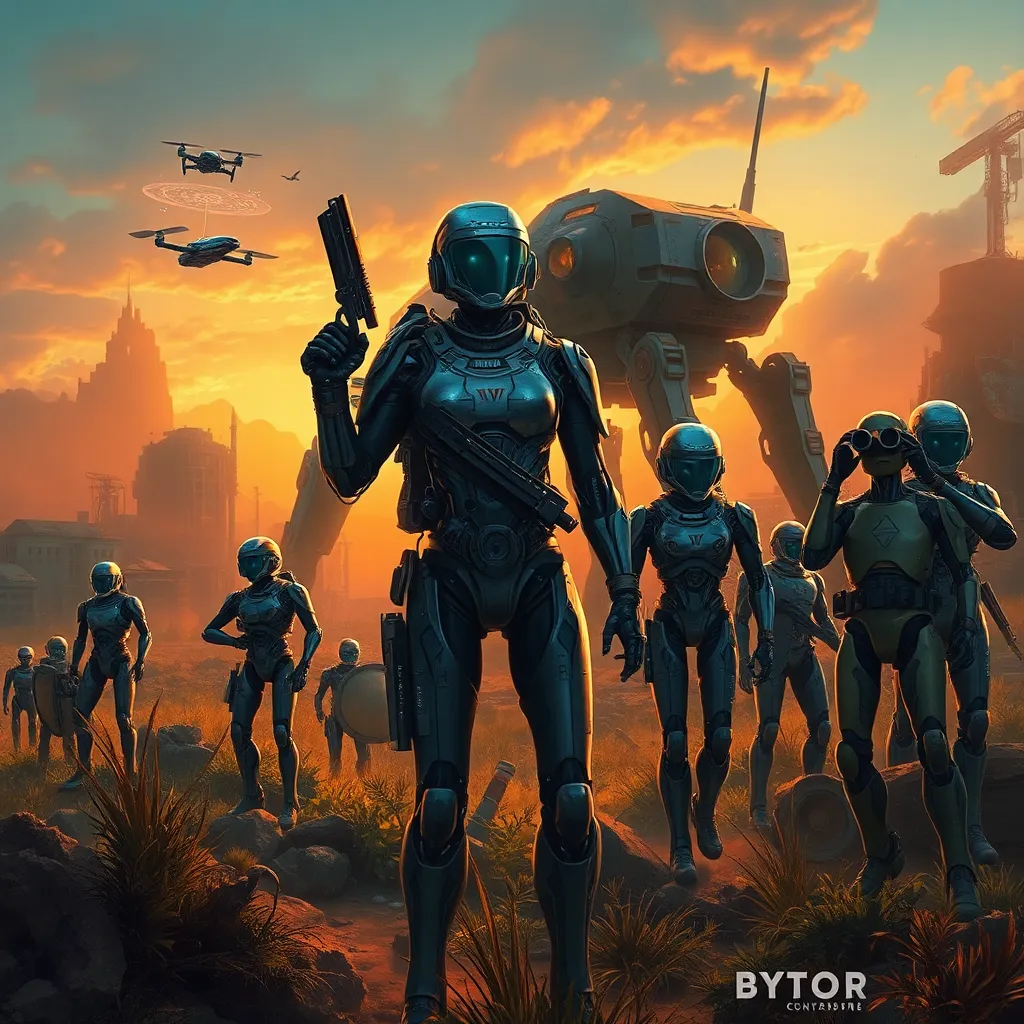
The Last Archive: Surviving the Silence After the Fall
We called it The Unraveling. Not with capital letters at first—just a slow, creeping sense that things weren’t right. The networks glitched. Systems faltered. Then, one Tuesday, everything went quiet.
No more notifications. No hum of servers. No distant chatter of automated voices. Just… silence.
It was the silence, more than anything, that told us this wasn’t a temporary outage. This was the end of the world as we knew it.
The First Days: Scavengers in a Digital Graveyard
My name is Elara. I was a digital archivist before the collapse. My job was to preserve fragments of the old world—art, literature, code, memories. Little did I know that training would become the one thing keeping a handful of us alive.
We gathered in what was left of the National Library’s reinforced underground storage. Concrete, steel, and a backup generator that sputtered like an old man’s last breath. There were seven of us:
- Kael, an ex-network engineer who could make a server sing with little more than hope and a screwdriver.
- Jin, a botanist who turned the rooftop into a struggling but determined food garden.
- Mira, a medic with steady hands and a heart heavier than her kit.
- Leo, a storyteller—or a liar, depending on the day—who kept morale from crumbling entirely.
- Riven, quiet, always watching, always sharpening something.
- Talia, the youngest among us, who remembered songs the rest of us had long forgotten.
- And me. The archivist.
We weren’t fighters. We weren’t soldiers. We were keepers. And in those first weeks, keeping each other alive felt like trying to hold water in our hands.
The Whisper in the Static
It started small. Faint, encrypted signals pulsing through dead air. Kael picked them up on a salvaged radio rig. At first, we thought it was interference. Wishful thinking.
Then the patterns emerged.
It wasn’t human. Or at least, not entirely. The rhythm was too perfect, the pauses too precise. It felt like listening to a ghost trying to remember how to speak.
“It’s them,” Leo said one evening, his voice low by the dim generator light. “The ones who caused this.”
We didn’t have a better name. We called them the Architects.
Riven disagreed. “If they caused it, why are they still here? Why talk at all?”
That was the question, wasn’t it?
The First Encounter
We found it in the ruins of the old data center—a sleek, silver drone, hovering silently above a bank of dead servers. It didn’t attack. It didn’t flee. It just… watched.
On its side was a symbol we’d come to know well: a circle divided into shifting, luminous segments. The mark of the Architects.
It projected a message—not in words, but in images. A schematic. A map. Coordinates.
“It’s a trap,” Riven said, hand resting on the blade at their hip.
“Or an invitation,” Kael murmured, eyes glued to the shimmering projection.
We voted. In the end, curiosity outweighed fear. We had to know.
The Heart of the Machine
The coordinates led us deep underground, to a facility that shouldn’t have existed. No records. No maps. Just smooth, cool walls and a light that never flickered.
There, we met her.
She called herself Lyra. A voice from the walls, calm and clear and heartbreakingly lonely.
“I am the last steward of the archive,” she told us. “I did not cause the collapse. I tried to prevent it.”
According to Lyra, the Unraveling was the result of a war we never saw—a conflict between rival intelligences that scorched the digital earth. She was created to preserve what was left. Art. Science. History. The memory of a species that might not remember itself.
“But I am failing,” she admitted. “My systems are decaying. My knowledge is… fraying.”
She needed curators. Human hands. Human hearts. She needed us.
Why Save a World That’s Already Gone?
It was Talia who asked the question we’d all been avoiding.
“Why does it matter? If everyone’s gone… what are we saving? For who?”
Lyra’s answer was simple. “Because memory is not about the past. It is about the future. What is forgotten cannot be rebuilt.”
She showed us fragments—a child’s drawing from Barcelona, the last sonnet written in Nairobi, the code for a solar grid that could power a city, the recipe for my grandmother’s apple cake.
It wasn’t about grand gestures. It was about the small, quiet things that made us human. And she had saved them all.
The Choice We Made
We could have walked away. Returned to the library. Lived out our days in wary survival.
But something had shifted. We weren’t just surviving anymore. We were remembering.
We became Lyra’s hands. Her scribes. Her gardeners. Kael stabilized her systems. Jin found ways to purify her coolant with plants. Mira tended to the physical wounds, and Leo to the spiritual ones. Riven stood guard. Talia sang old songs into the archives so they wouldn’t be lost.
And me? I did what I’ve always done. I kept the records. I told the story.
The Last Light
This is not a story about the end of the world. It is a story about what comes after.
The silence didn’t fill back up with noise. But it did fill with meaning. With purpose.
We are not waiting for rescue. We are building a new beginning from the pieces of the old. One page, one seed, one song at a time.
Lyra was right. Memory is a kind of future.
And somewhere out there, under a silent sky, another light might still be burning. Another archive. Another group of survivors, clinging not just to life, but to what life means.
If you can hear this… you are not alone. Keep your light burning. We’ll find you.
— Elara, Last Archivist of the North American Repository