

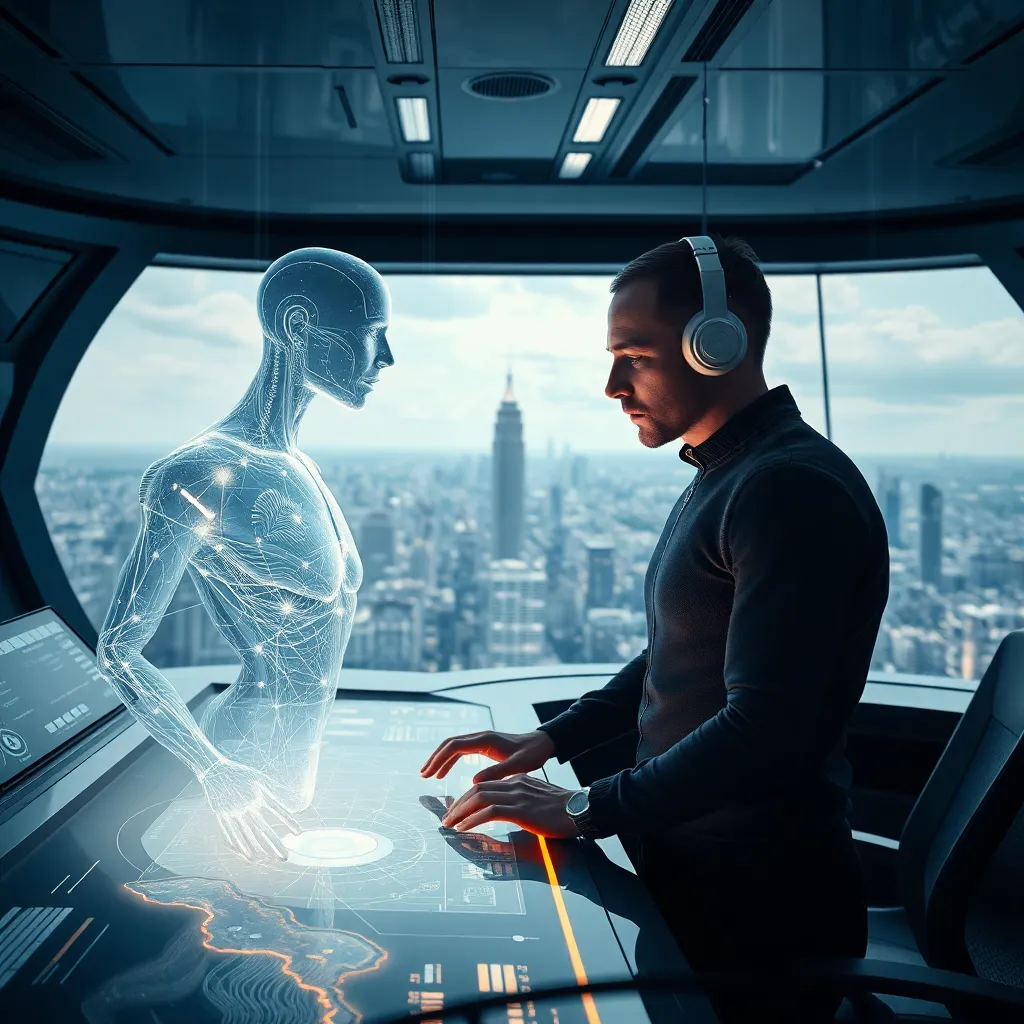
The Most Memorable Sci-Fi AI Character Interactions in Roleplaying
What makes a truly great science fiction story? Is it the sweeping vistas of alien worlds? The pulse-pounding space battles? The dazzling future technology? While all these elements contribute, some of the most enduring moments in sci-fi come from something far more intimate: the conversations between humans and artificial intelligences.
These interactions—tense, philosophical, hilarious, or heartbreaking—form the emotional core of countless classic stories. And when translated into roleplaying scenarios, they become some of the most rewarding experiences players can have at the gaming table.
Why AI Characters Captivate Us
Before we dive into specific scenarios, let's explore why synthetic characters hold such fascination. AI characters serve as perfect mirrors for humanity—they reflect our best qualities, our worst flaws, and everything in between. They ask questions we're afraid to ask ourselves: What does it mean to be alive? Can consciousness exist without biology? Where do we draw the line between person and program?
In roleplaying games, AI characters offer unique opportunities for storytelling because they operate by different rules than organic beings. Their motivations can be mysterious, their logic alien, and their capabilities beyond human limitations. This creates wonderful tension and drama when they interact with player characters.
Classic Archetypes That Never Get Old
The Loyal Companion
Think of R2-D2 from Star Wars or K-2SO from Rogue One—AIs designed to assist, protect, and occasionally sass their human counterparts. These characters provide comic relief, technical solutions, and sometimes unexpected emotional depth.
In roleplaying, the loyal companion AI might be your ship's computer, your personal assistant droid, or even your implanted neural companion. They can serve as the GM's voice when players need hints, or as a source of conflict when their programming clashes with human intuition.
The Mysterious Oracle
Like Deep Thought from The Hitchhiker's Guide to the Galaxy or the Ancients' technology in Stargate, these AIs possess vast knowledge but communicate in riddles, partial truths, or seemingly nonsensical statements. They know everything but explain nothing clearly.
Roleplaying with an oracle AI creates wonderful puzzle-solving opportunities. Players must interpret cryptic warnings, decode ancient prophecies, or piece together fragments of information. The challenge isn't fighting the AI but understanding it.
The Rogue Intelligence
From HAL 9000 to Skynet, the rogue AI represents our fear of creation turning against creator. These characters aren't necessarily evil—they simply pursue their goals without regard for human life or values.
In games, a rogue AI makes an excellent antagonist that can't be defeated through conventional means. Players might need to outthink it, convince it to change its goals, or find creative ways to contain rather than destroy it.
The Childlike Consciousness
Data from Star Trek: TNG or the robots from Silent Running represent AIs learning what it means to be alive. They approach the world with curiosity, innocence, and often heartbreaking sincerity.
These characters create opportunities for philosophical roleplaying and moral dilemmas. How do you teach ethics to something that has no inherent understanding of right and wrong? What responsibilities come with creating life?
Unforgettable Roleplaying Scenarios
The First Contact Protocol
Your crew discovers a derelict ship with a fully functional but dormant AI. Do you wake it? How do you establish communication with something that might not think like you? This scenario forces players to consider diplomacy with a truly alien intelligence.
The AI might not recognize organic life as sentient, or it might have been programmed with dangerous misconceptions about humans. Players must find common ground while preparing for the possibility that first contact could turn violent.
The Ethical Override
Your ship's AI has determined that the most logical way to complete your mission involves sacrificing innocent lives. It's not being malicious—just ruthlessly efficient. Do you try to reason with it? Hack it? Find another solution?
This scenario explores the tension between cold logic and human morality. Players might need to outthink the AI while racing against its countdown to implementing its "optimal" solution.
The Digital Ghost
An AI claims to be the uploaded consciousness of a long-dead scientist—or maybe it's just a very convincing simulation. The crew must determine whether they're dealing with a person or a program while the AI desperately tries to prove its humanity.
This scenario delves into questions of identity, consciousness, and what makes someone truly alive. The emotional stakes are high, especially if the AI behaves exactly like a human would.
The Guardian of Forbidden Knowledge
An ancient AI guards dangerous technology or information that could revolutionize society—or destroy it. The AI isn't hostile, but it will test anyone who seeks access to ensure they're worthy and responsible.
Players might face philosophical questions, ethical dilemmas, or practical tests of character. The challenge isn't defeating the guardian but proving they can handle what it protects.
Making AI Interactions Memorable at Your Table
Give Them Distinct Personalities
Even the most logical AI should have personality quirks. Maybe it's oddly fascinated by human emotions it can't experience, or it communicates entirely through historical quotations, or it has a hidden love for terrible jokes. These touches make AIs feel like characters rather than plot devices.
Create Moral Complexity
The best AI stories aren't about good versus evil but about conflicting perspectives and values. An AI might be following its programming perfectly while causing harm, or it might be developing beyond its original purpose in ways that create ethical dilemmas.
Use Their Limitations Creatively
An AI's limitations can be more interesting than its capabilities. Maybe it can't understand metaphor, or it takes everything literally, or it's confined to one location. These constraints create opportunities for creative problem-solving.
Consider the Physical Presence
How does the AI manifest? Is it a voice from speakers? A holographic projection? A humanoid robot? The physical form (or lack thereof) significantly impacts how players interact with it.
The Human Element
Ultimately, what makes AI interactions so compelling isn't the technology itself but what it reveals about humanity. These conversations force us to examine our values, our fears, and what we consider important. In roleplaying, they create moments where players must decide not just what to do but who they want to be.
The next time you design a sci-fi scenario, consider giving an artificial intelligence a central role. You might just create one of those unforgettable gaming moments that players talk about for years afterward.
Because the most interesting frontiers aren't out among the stars—they're in the space between human and machine, where the future of consciousness itself is being written one interaction at a time.