

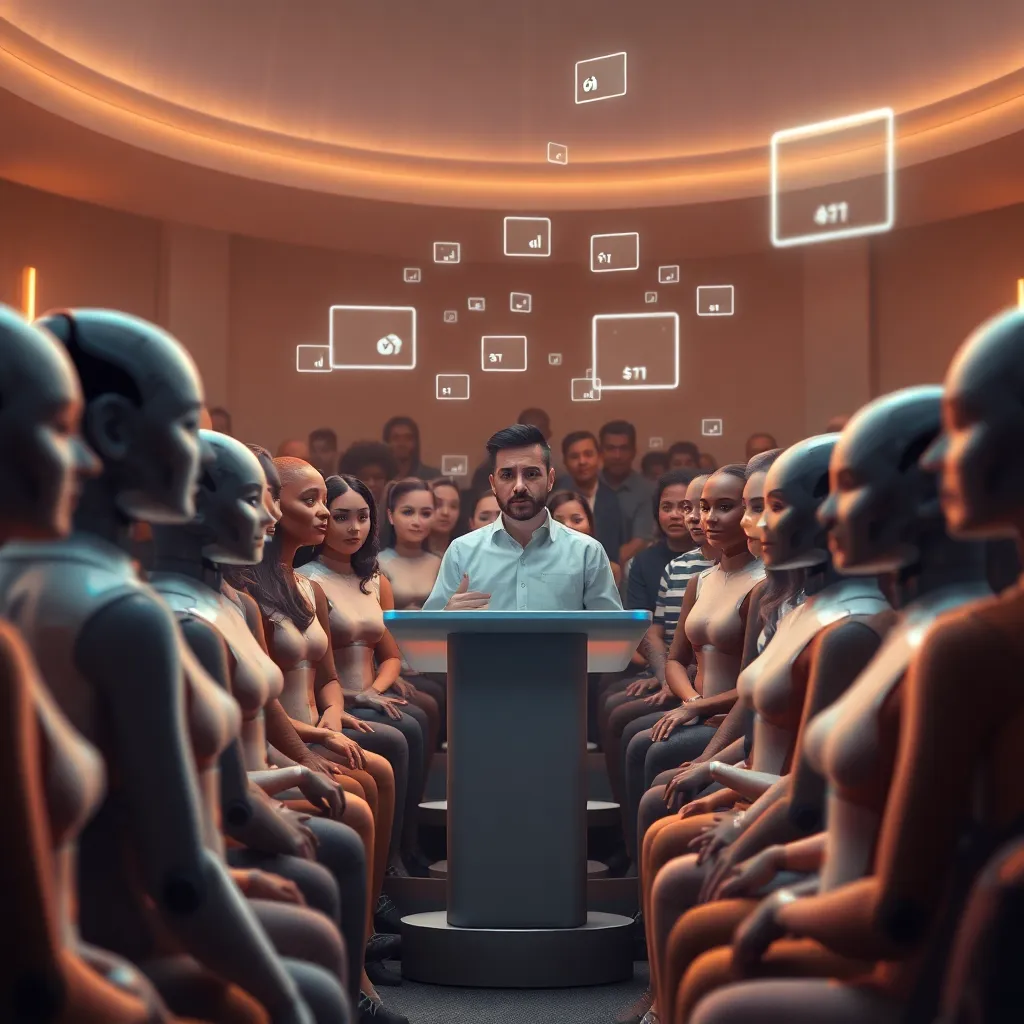
Conquer the Podium: How Virtual Audiences Are Revolutionizing Public Speaking Practice
You’ve practiced your speech in front of the mirror. You’ve mumbled it to your dog. You’ve even recorded yourself on your phone, cringing at the sound of your own voice. Yet, when you step into the conference room or onto the stage, your palms still sweat, your mind goes blank, and the carefully crafted words evaporate. Why? Because practicing in a vacuum misses the most critical element of public speaking: the audience.
For centuries, the only way to truly prepare was to find a live, human audience—a nerve-wracking prospect in itself. But what if you could rehearse in front of a responsive, simulated crowd that provides real-time feedback without the real-world judgment? This isn't science fiction; it's the cutting edge of communication training, and it’s changing the game for everyone from students to CEOs.
The Psychology of Performance: Why an Audience Changes Everything
Public speaking anxiety, or glossophobia, isn't just about forgetting your lines. It's a primal response to being evaluated. Our brains are hardwired to care about social standing. A friendly audience of colleagues can feel like a panel of predators to our subconscious mind. This triggers a fight-or-flight response, diverting blood flow from the cognitive centers we need for eloquent speech to our limbs, preparing us to run.
Practicing alone simply doesn't activate this psychological pressure cooker. You might deliver a flawless monologue in your kitchen, but the moment you make eye contact with a single person, the dynamic shifts entirely. A simulated audience bridges this gap. It introduces the feeling of being watched and listened to, allowing you to desensitize yourself to that pressure in a controlled, safe environment. It’s exposure therapy for the podium.
Beyond the Empty Room: What Modern Simulation Offers
Today’s technology goes far beyond a static image of people on a screen. Sophisticated simulations create dynamic, interactive environments.
1. Responsive Audiences: Imagine a virtual room where avatars nod in understanding, lean forward with interest, or even check their imaginary phones if you lose their attention. These non-verbal cues are priceless. They teach you to read the room in real-time, an skill that is impossible to practice alone. You learn to notice when you’ve explained a complex idea clearly (the virtual nods) or when you need to change pace (the virtual fidgeting).
2. Tailored Scenarios: Are you preparing for a technical briefing for engineers? A fundraising pitch for investors? A eulogy for a somber occasion? You can customize the virtual audience to match your real-world scenario. The attire, the demeanor, and even the expected background knowledge of the simulated listeners can be adjusted. This allows for hyper-specific practice that is directly relevant to your goal.
3. Controlled Difficulty: Start with a small, highly engaged group. As your confidence grows, you can gradually increase the audience size, adjust their attentiveness levels, or even introduce ‘difficult’ audience members who might cross their arms or look skeptical. This graduated exposure builds resilience systematically.
The Feedback Loop: Learning from Your Digital Critics
The true power of this technology lies not just in the simulation, but in the analysis. After your practice session, you receive feedback that is both detailed and objective.
- Pacing and Pauses: The software can analyze your speech patterns, highlighting if you’re speaking too quickly, using excessive filler words (“um,” “like”), or failing to pause for emphasis.
- Body Language Analysis: Using your device's camera, the system can provide feedback on your posture, hand gestures, and eye contact. Are you shifting your weight nervously? Are you making sustained ‘virtual’ eye contact with different parts of the audience?
- Content Analysis: Some advanced systems can even evaluate the structure and clarity of your content, suggesting places where a story or data point might strengthen your argument.
This feedback is free from the polite veneer a friend might offer. It’s data-driven, specific, and actionable. You’re not just told you were “a bit quiet”; you’re shown a decibel meter and a graph of your vocal variation.
A Tool, Not a Replacement
It’s important to frame this technology correctly. A virtual audience is an incredible training tool, but it is not a complete substitute for the beautiful, unpredictable complexity of human interaction. The subtle energy of a live room, the unexpected question, the shared laugh—these are elements that can only be fully experienced with real people.
Think of it as a flight simulator for pilots. No one would suggest a pilot learns solely in a simulator. But hours in the simulator allow them to practice emergency procedures, navigate tricky approaches, and build muscle memory without ever risking a catastrophe. Similarly, practicing with a virtual audience allows you to build your core speaking skills, manage anxiety, and refine your delivery in a consequence-free space. It prepares you to be a better pilot when you finally take control of the actual room.
Getting Started: Your First Session with a Virtual Crowd
If you’re intrigued, diving in is easier than you might think.
- Define Your Goal: What is the one thing you want to improve? Is it cutting down on filler words? Projecting more confidence? Mastering the flow of a specific presentation? Start with a clear objective.
- Choose Your Setting: Select an audience scenario that matches your upcoming real-life speaking engagement.
- Embrace the Awkwardness: The first time you speak to a room full of digital faces, it will feel strange. That’s okay! Lean into the awkwardness. The goal is to get comfortable with the feeling of being observed.
- Focus on the Feedback: After your session, don’t just look at the overall score. Dive into the specific metrics. Identify one or two key areas for improvement and focus on them in your next session.
The Future of Eloquence
The fear of public speaking is universal, but the tools to conquer it are becoming more personalized and powerful. By harnessing simulated environments, we can demystify the experience, build competence, and ultimately, find our authentic voice. The goal isn’t to become a perfect, robotic speaker. It’s to become a confident, connected, and compelling one. The virtual audience is your private rehearsal space, your objective coach, and your stepping stone to commanding the real stage with grace and power. The podium is waiting.